
Adapted from an article by RAW Travel Team, originally published on rawtravel.com.
Japan is the international destination of choice for Australians right now. With heavenly hiking trails, a unique and fascinating culture, amazing food, friendly and welcoming locals, and easy access, it makes perfect sense. One of the highlights is walking the Kumano Kodo – Japan's sacred pilgrimage trail, and the only pilgrimage route besides the Camino de Santiago to be designated a World Heritage site.
The most popular and well-preserved route is the 68km Nakahechi (or Imperial Route), which runs from Takijiri-oji (near Tanabe) to Hongu Taisha and then on to Nachi Falls. For first-timers, Japan can be daunting, so here are our expert tips on the do's and don'ts of planning and completing your Kumano Kodo pilgrimage.
Do: Plan your itinerary well ahead
With increasing numbers of people choosing Japan and the Kumano Kodo for their next hike, early booking is the best way to secure the trips and dates you want. There are limited places to stay along the trail and accommodations become fully booked during the peak spring and autumn seasons. March to May is the traditional cherry blossom season (sakura), and from September to November the vibrant autumn colours (koyo) rival the blossoms. We recommend booking 6 to 12 months in advance.
Don't: Underestimate the terrain
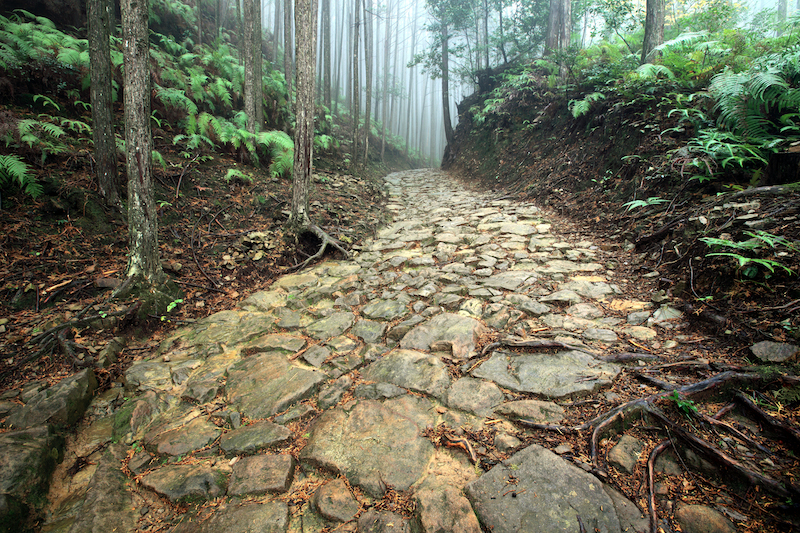
The Kii Peninsula is an exceptionally mountainous, sparsely populated region, making the Kumano Kodo rugged and demanding. The trail weaves through mountain passes, quaint villages, bamboo groves, mossy Japanese cypress forests and terraced rice fields. There are steep ascents and descents, and distances can be deceptive – it can take 7 or 8 hours to walk as little as 14km a day, especially if it has been raining. The highest point is 868m on the Ogumotori-goe section. We highly recommend walking poles.
Do: Pack light and use luggage transfers
One of the great luxuries of a supported Kumano Kodo walk is having your main luggage transferred between guesthouses. You only need to carry a day pack with water, snacks, rain gear and your pilgrim passport. Pack light – the climbs are much more enjoyable without a heavy load. See our practical considerations page for a full packing guide.
Don't: Expect Western food or special menus
Meals at the family-run guesthouses are elaborate multi-course affairs and very filling. Japanese cuisine takes a lot of preparation, time and energy. There will be many unfamiliar dishes, but all are excellent – be prepared to try new things. Only Japanese food is served; there are no Western options, and all guests are cooked the same meals. Do not make on-the-spot requests: in Japanese culture it is considered shameful to say no to guests, so unplanned requests cause real stress for guesthouse owners. Guesthouses along the trail cannot cater for specific dietary requirements, so the Kumano Kodo is not suitable for those with severe allergies or strict dietary needs.
Do: Learn how to use chopsticks
Chopsticks are used to eat most traditional Japanese dishes, and there are important rules: don't stick your chopsticks upright into food (especially rice – this is only done at funerals), don't spear food, don't point with them, and don't play with them. When eating from small bowls, it is correct to pick up the bowl and bring it close to your mouth.
Don't: Disrespect sacred sites
Temples and shrines stand as guardians of a spiritual legacy. Visitors are encouraged to wash their hands and mouths before stepping onto consecrated grounds – look for the water basin and wooden ladle. Dress conservatively, maintain a respectful silence, refrain from intrusive photography, and bow in gratitude as you exit. Read more on our Kumano temples page.
Do: Pace yourself
Amidst mossy shrines and secluded tea houses, the Kumano Kodo invites you to immerse yourself fully in the serenity of this revered pilgrimage route. Savour each step, take respite at the numerous oji shrines scattered along the route, and indulge in the warmth of a traditional onsen after each day's walk. The path, once trodden by emperors and pilgrims alike, offers not just a physical journey but a soulful odyssey.
Walking the Kumano Kodo – how to get started
The Kumano Kodo is very well suited to self-guided trekking. RAW Travel has decades of knowledge and the best contacts for a seamless and stress-free walk, and our exclusive Kumano Kodo Guidebook is the best English-language guide available. Contact us today to start planning your Kumano Kodo hike.